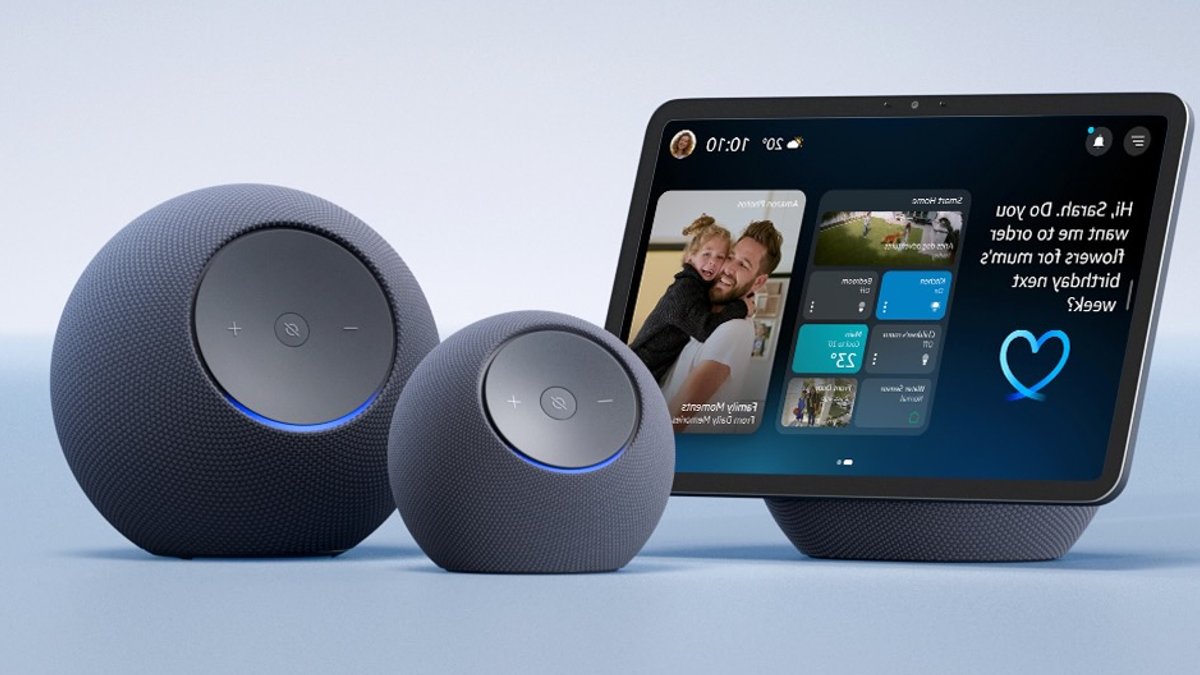
Alexa+ has landed in Australia to offer an AI-powered experience that is more powerful and personal, addressing a market where the assistant already handles billions of interactions annually. Amazon has introduced this upgrade to the personal assistant, which the company describes as a significant leap forward in conversational technology. The new version is designed to be more than just a tool for answering questions or controlling smart home devices; it aims to provide a deeper, more useful interaction that understands local context and user intent.
Understanding the local context
The upgrade goes beyond basic language processing capabilities. Amazon notes that the system recognises Australian accents, slang, and idioms, allowing it to interact with users in a casual and conversational tone. The technology is built on advanced large language models (LLMs) and an all-new architecture to connect hundreds of services and devices. This setup allows Alexa+ to deliver a personalised experience tailored to a household’s needs rather than a generic response.
Related: These 5 Characters Need to Be Embedded Early in School
Local expressions like “arvo,” “servo,” and “snags” are now part of the vocabulary, along with familiarity with Australian culture, sports, and music. The development team worked on infusing the assistant with an Australian personality using new speech understanding techniques. This focus on local nuance helps the system understand what users mean even when they stumble or change their mind mid-sentence, making the interaction feel more like a conversation with a friend.
Action-oriented capabilities
One of the primary shifts with this release is the move from passive information retrieval to active task execution. The system can now act on a user’s behalf, handling tasks such as booking a table at a local restaurant, checking a calendar for conflicts, or saving family recipes. It can even recommend and purchase gifts for loved ones based on stored preferences.
The assistant also excels at managing smart home devices. Users can simply say it is dark to turn on the lights, or ask if a package has been delivered via a Ring Doorbell Camera. Alexa+ will then review video footage to confirm. The ability to create customised routines has also improved; users can combine multiple actions by asking for them rather than handling an app to piece commands together. The system can even recognise household members through visual and voice ID, adjusting responses based on who is speaking.
Related: Identifying threats in cargo through scanning
It is difficult to ignore the shift in how digital assistants operate. Past iterations often felt like rigid command interfaces where a specific syntax was required to get a single task done. The new approach removes that friction, allowing for more natural, open-ended requests that trigger a chain of actions. This change transforms the relationship between the user and the device, moving from a transactional exchange to a more adaptive, ambient presence that anticipates needs before they are explicitly voiced.
Pricing and access
Access to Alexa+ is not uniform across all users. The rollout begins with an invitation process for thousands of customers, with a general availability path through an eligible Echo device. More than 98 per cent of current Alexa users in Australia have compatible hardware, allowing for a broad entry point for the upgrade.